Things to Do in Brussels: Grand Place, Atomium & Museums
The Grand Place, the Atomium and a museum on almost every corner sit inside a centre small enough to cross on foot.
Neighborhoods
Grand-Place & Îlot Sacré for first-time visitors.
Sainte-Catherine & Dansaert for restaurants and bars.
Sablon & Marolles for antiques and the flea market.
Ixelles & Flagey for Art Nouveau streets and cafés.
Signature Sights
Start at the Grand Place of Brussels, then head north to the Atomium and Mini-Europe before working through the Royal Museums of Fine Arts.
Best Time Windows
May, June and September have the mildest weather and the shortest queues.
July brings the Ommegang pageant, and late November to early January brings the Winter Wonders market.
Getting Around
STIB/MIVB runs four metro lines, 17 tram routes and more than 50 bus lines.
24, 48 and 72-hour passes cover the whole network.
Most things to see in Brussels sit within a 20-minute walk of the Grand-Place.
Food & Nightlife
Waffles, frites with mayonnaise and moules-frites.
Sainte-Catherine for seafood, Rue des Bouchers for brasseries.
Saint-Géry and Flagey for bars that stay open late.
Delirium Café lists over 2,000 beers.
Seasonal Highlights
Spring opens the Royal Greenhouses of Laeken for a few weeks only.
Summer brings the Brussels Summer Festival and, in even years, the Flower Carpet on the Grand-Place.
September is the quietest month for museums.
December adds the Christmas market and the ice rink.
Side Trips
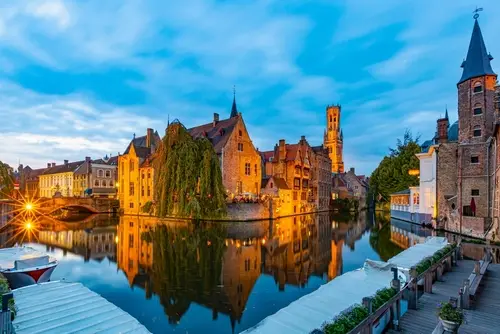
Bruges for canals and the belfry, about an hour by direct train.
Ghent for the Ghent Altarpiece and Gravensteen castle, roughly 36 minutes.
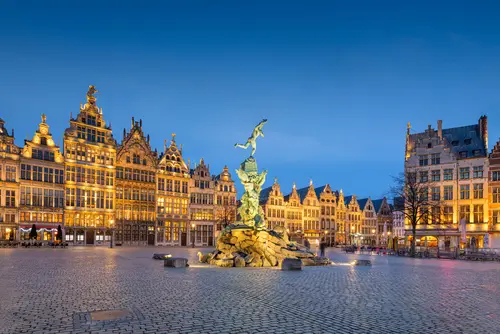
Antwerp for Rubens and the diamond district, 40 to 50 minutes.
Things to Do in Brussels
Grand Place, Landmarks & the City Centre
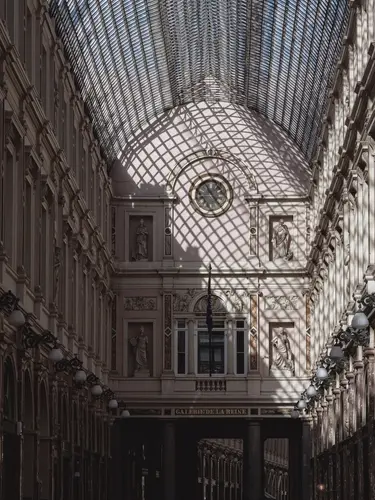
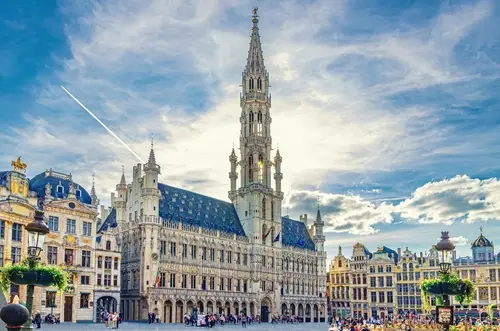
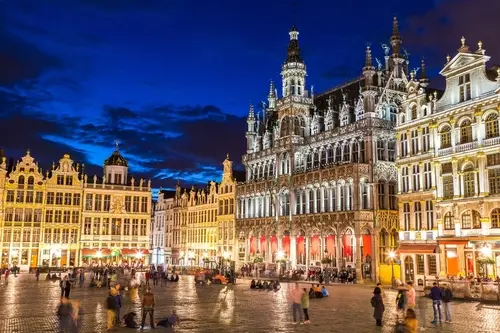
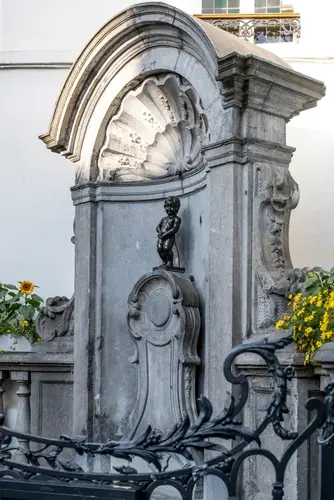
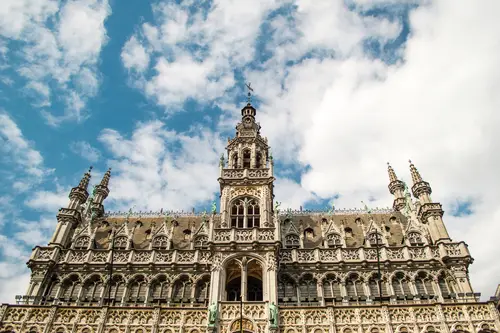
The Grand Place of Brussels is the obvious starting point: a UNESCO-listed square ringed by gilded guild houses, the Gothic Town Hall and the Brussels City Museum. From there it is a five-minute walk to Manneken Pis, ten to the Galeries Royales Saint-Hubert and fifteen uphill to the Royal Palace and Mont des Arts viewpoint. Head north by metro for the Atomium, built for Expo 58 and still the city's best-known landmark.
Museums, Art Nouveau & Comic Strip Heritage
Brussels museums cover a lot of ground for a city this size. The Royal Museums of Fine Arts of Belgium hold the Old Masters and the Magritte Museum, the largest collection of the Belgian surrealist anywhere. The Belgian Comic Strip Center sits in a Victor Horta department store and traces Tintin and the Smurfs back to their origins. Horta's own house, the Musical Instruments Museum and the Parlamentarium fill out a rainy afternoon.
Chocolate, Waffles, Beer & Belgian Food
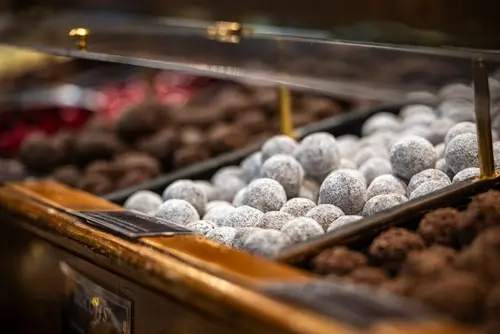
Food in Brussels runs from street stands to Michelin stars. Maison Dandoy has been baking waffles since 1829, Maison Antoine is the reference point for frites with mayonnaise, and Choco-Story explains where Belgian chocolate actually comes from before you spend money on it. Best restaurants in Brussels for traditional cooking cluster around Sainte-Catherine and Rue des Bouchers, where moules-frites, stoemp and carbonnade flamande are on most menus.
Shopping in Brussels & Nights Out
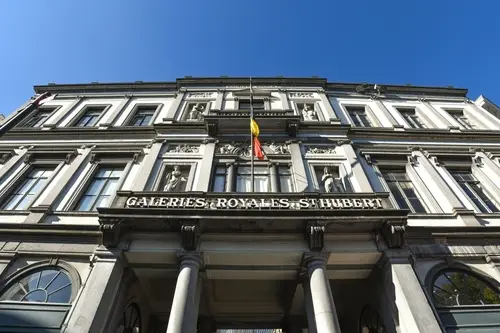
Shopping in Brussels splits into three areas. Rue Neuve is the pedestrianised high street and the second busiest shopping street in Belgium. The Galeries Royales Saint-Hubert, a glass-roofed arcade from 1847, is where the chocolatiers and the older tea rooms are. Rue Antoine Dansaert covers Belgian designers, and the Place du Jeu de Balle flea market in the Marolles runs every morning. After dark, Saint-Géry has the highest concentration of bars and Flagey draws a more local crowd.
Brussels Neighborhoods
Grand-Place & Îlot Sacré
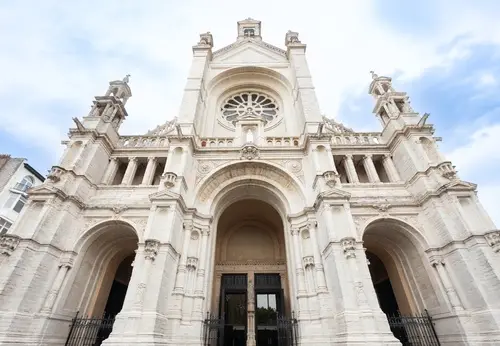
The old core of the city, and where most first-time visitors stay. The Grand Place Brussels sits at the centre, with the Îlot Sacré's narrow lanes fanning out around it towards Manneken Pis, the Galeries Royales Saint-Hubert and the restaurant strip on Rue des Bouchers. Almost everything on a first Brussels itinerary is within walking distance, and Brussels-Central station is five minutes away.
Sainte-Catherine & Dansaert
Ten minutes north-west of the Grand-Place, on the site of the old fish market. Sainte-Catherine is where locals go for seafood and where the square fills with terraces in summer. Rue Antoine Dansaert next door is the fashion street, lined with Belgian designers and concept stores, and Saint-Géry between the two has the cocktail bars and craft beer pubs that keep going after the centre empties out.
Sablon & Marolles
Two adjoining districts on the upper edge of the centre, both built around trading in old things. Place du Grand Sablon has the antique dealers, the art galleries and several of the city's best-known chocolatiers, plus a weekend antiques market. Walk downhill into the Marolles and the tone changes: working-class, still partly Brusseleir-speaking, with the daily Place du Jeu de Balle flea market and the Palace of Justice looming above it.
Ixelles & Flagey
South of the ring, Ixelles is where Brussels stops feeling like a tourist zone. The streets around the Ixelles Ponds hold some of the city's best Art Nouveau architecture, including Victor Horta's own house. Place Flagey, named after the Art Deco broadcasting building on its edge, has a weekend market, a well-known frites stand and a run of restaurants that locals rate above anything near the Grand-Place.
How to Get to Brussels City
- Airport
- Train
- Bus
- Car
Brussels Airport (BRU, Zaventem) & Brussels South Charleroi (CRL)
-
Airport Express Train The station sits on level -1, directly under the arrivals hall. Trains reach Brussels-North, Brussels-Central and Brussels-Midi in roughly 17 to 19 minutes, about every 10 minutes from 5am to midnight.
-
Airport Bus 12 & 21 Runs to Schuman and Luxembourg in the European Quarter, useful if you are staying near the EU institutions rather than the centre.
-
Taxi & Rideshare Licensed taxis wait outside the arrivals hall and reach the city centre in 20 to 30 minutes outside rush hour. Uber and Bolt also operate at the airport.
-
Charleroi Airport Shuttle Low-cost carriers often use Brussels South Charleroi, about 46 km south. The Flibco shuttle runs direct to Bruxelles-Midi in 55 to 60 minutes, roughly every 20 minutes.
Bruxelles-Midi, Central & Nord Stations
-
Brussels-Midi / Brussel-Zuid The international terminal. Eurostar arrives from London, Paris and Amsterdam, and TGV and ICE services connect Brussels with France and Germany. Also the Belgium Midi train station stop for domestic Intercity trains.
-
Brussels-Central The closest station to the Grand-Place, about a five-minute walk. Domestic services only, but nearly every Intercity train stops here.
-
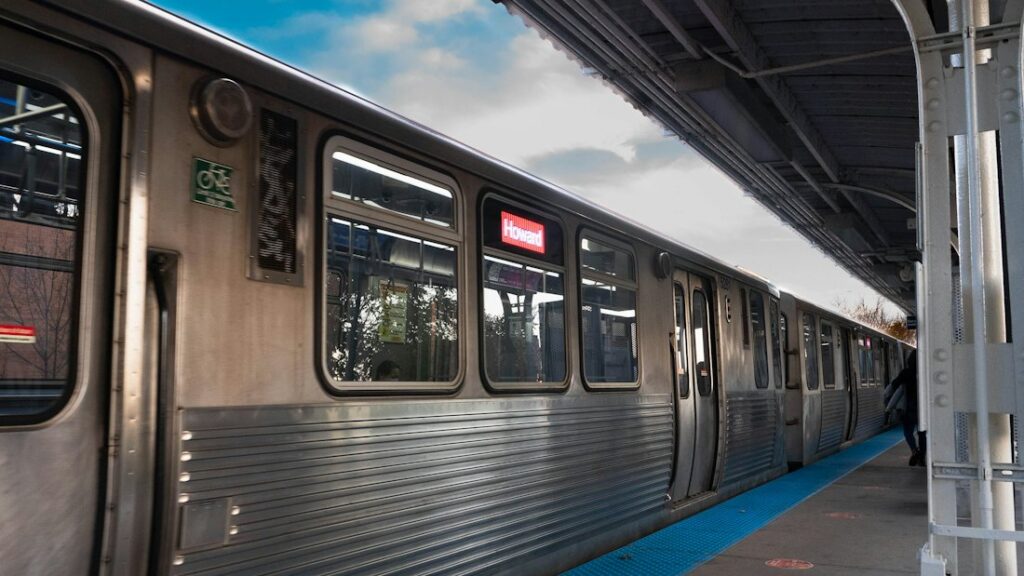
Brussels-North Serves the business district and the northern communes, with pre-metro lines 3 and 4 reaching the centre in 5 to 7 minutes.
-
Travelling Belgium by Train SNCB connects Brussels with Leuven in about 23 minutes, Ghent in 36, Antwerp in 40 to 50 and Bruges in around an hour.
Long-Distance & Regional Coaches
-
Bruxelles-Nord Coach Stops Brussels has no single coach terminal building. International services use street-side stops next to Brussels-North station, on Rue du Progrès and Boulevard du Roi Albert II, a few hundred metres north of the platforms.
-
Budget Operators FlixBus, BlaBlaCar Bus and Eurolines run overnight and daytime coaches to Paris, Amsterdam, Cologne, London and further afield, usually for less than the equivalent train fare.
-
Airport Coach Links The Flibco shuttle connects Charleroi Airport with Bruxelles-Midi, and several operators serve Brussels Airport directly from other Belgian cities.
-
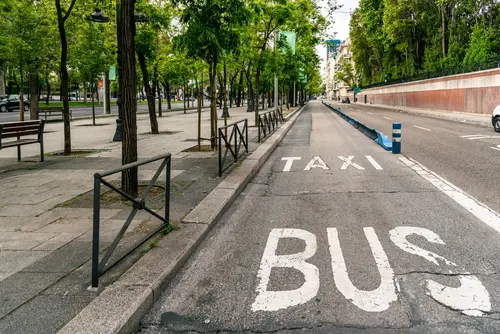
Local STIB Buses More than 50 city bus lines cover the communes the metro does not reach, on the same tickets and passes as the metro and trams.
Driving to Brussels
-
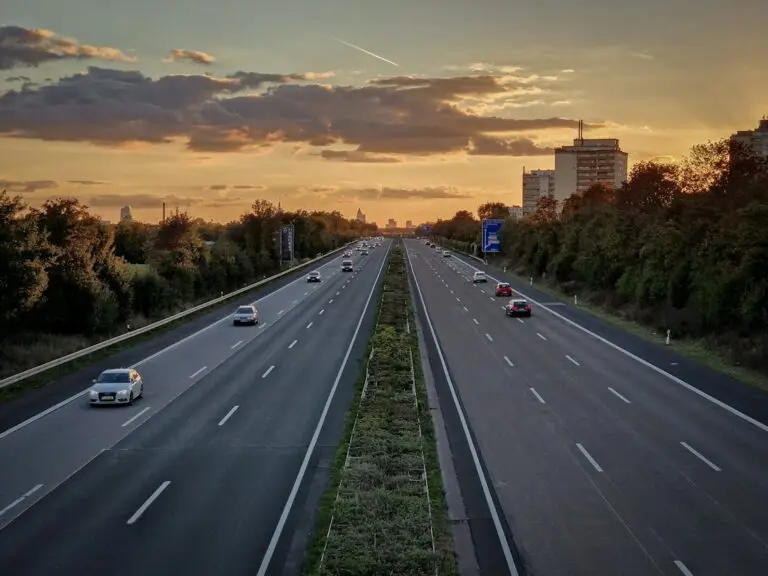
Major Motorways The R0 ring road links the E19 from Antwerp and Amsterdam, the E40 from Ghent and Liège, the E411 from Namur and Luxembourg and the A12 from Boom. Antwerp and Ghent are both under an hour outside peak times.
-
Low Emission Zone The whole Brussels-Capital Region is a low emission zone. Since January 2026, Euro 5 diesel and Euro 2 petrol cars are banned, and foreign-plated vehicles must register once, free of charge, before entering. Fines run from €150.
-
Parking Considerations On-street parking in the centre is metered and heavily restricted, and much of the Grand-Place area is pedestrianised. Underground car parks are the practical option and are cheaper booked in advance.
-
Park & Ride The R0 and the access roads to the park-and-ride car parks sit outside the LEZ, so you can drive a non-compliant car that far and switch to a tram or metro into the centre.
Book tickets in Brussels
Brussels Tickets
Our ticket site for Brussels, with entry tickets, opening hours and visitor information for the main sights.
-
Atomium
-
Choco-Story
-
Train World
Plan your perfect Brussels itinerary
Brussels in 2 Days
We recommend: the city-centre loop
-
Day one covers the Grand Place, the Town Hall, Manneken Pis, the Galeries Royales Saint-Hubert and the climb up to Mont des Arts.
-
Day two takes the metro to the Atomium and Mini-Europe, then comes back for the Royal Museums of Fine Arts.
-
Enough for a weekend, and everything except the Atomium is walkable.
Museums & Art Nouveau Brussels
We recommend: three days, museum-led
-
Work through the Royal Museums of Fine Arts of Belgium, including the Old Masters and the Magritte Museum.
-
Add the Belgian Comic Strip Center, the Musical Instruments Museum and Victor Horta's house in Saint-Gilles.
-
A Brussels Card covers most of these museums for 24, 48 or 72 hours and pays for itself after three or four visits.
Chocolate, Beer & Waffles
We recommend: two days, eating-led
-
Start at Choco-Story, then compare the chocolatiers around the Sablon and inside the Galeries Royales Saint-Hubert.
-
Eat waffles at Maison Dandoy, frites at Maison Antoine and moules-frites somewhere around Sainte-Catherine.
-
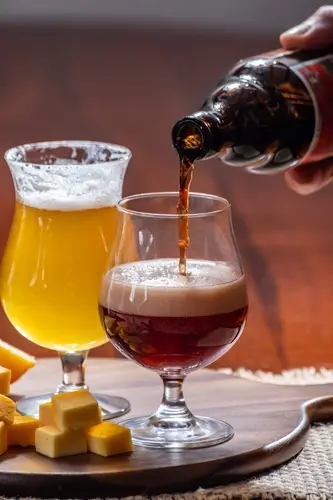
Finish with a Trappist or lambic beer at Delirium Café or one of the older brown bars near the Bourse.
Brussels & Flanders in 5 Days
We recommend: Brussels as a base
-
Give Brussels two days, then use it as a base for day tours from Brussels by train.
-
Bruges and Ghent are both about an hour away, Antwerp 40 to 50 minutes and Leuven 23.
-
No car needed, and Belgian Rail sells day return tickets that make this cheaper than moving hotels.
Beyond Brussels: Best Day Trips & Nearby Escapes
Bruges
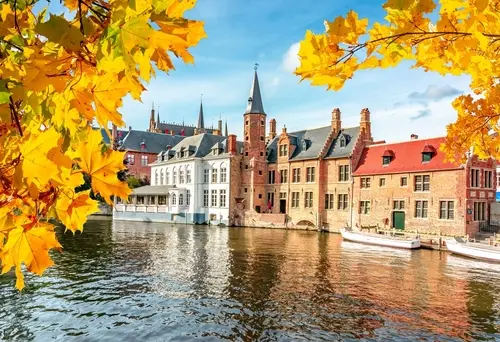
The most popular of all the day trips from Brussels, and about an hour by direct train with departures every 20 to 30 minutes. The medieval centre is compact enough to cover on foot: the Markt and its belfry, the canals around the Rozenhoedkaai, the Groeningemuseum and the Church of Our Lady with Michelangelo's Madonna.
Ghent
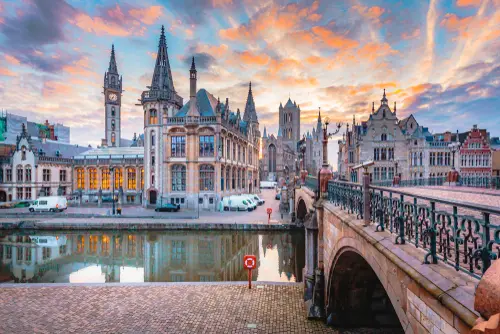
Around 36 minutes from Brussels and less crowded than Bruges. Saint Bavo's Cathedral holds the Ghent Altarpiece by the Van Eyck brothers, the Gravensteen is a genuine moated castle in the middle of town, and the Graslei quayside is lined with guild houses from the city's cloth-trading years.
Antwerp
Belgium's second city, 40 to 50 minutes away by Intercity train. The station itself is worth the trip. Beyond it are the Cathedral of Our Lady with four Rubens altarpieces, the Rubens House, the Plantin-Moretus printing museum, the MAS on the docks and the diamond district behind the station.
Leuven
The shortest trip on this list at about 23 minutes. Leuven has one of the most elaborate late-Gothic town halls in Europe, a university founded in 1425, and the Oude Markt, a single square lined end to end with bars. The Stella Artois brewery runs tours a short walk from the station.
Waterloo
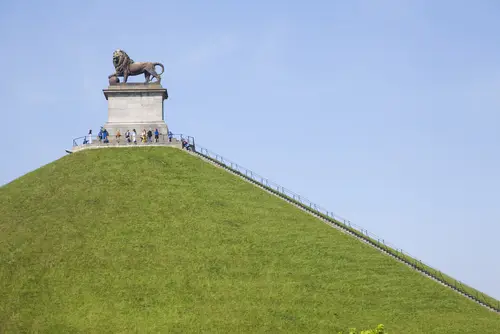
The 1815 battlefield sits under an hour south of the city by train to Braine-l'Alleud and a short bus ride. Climb the 226 steps of the Lion's Mound for the view over the field, then work through the underground Memorial 1815 museum and Wellington's headquarters in the village.
Dinant
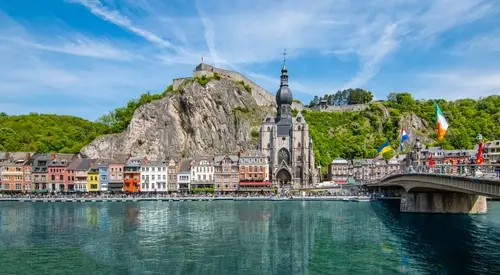
The longest trip here, roughly two hours via Namur, and the one that looks least like the rest of Belgium. A collegiate church with a bulbous spire sits at the foot of a cliff, a citadel reached by cable car or 408 steps sits on top, and the Meuse runs through the middle. Adolphe Sax was born on the main street.