
Spain in 10 Days by Train: Barcelona, Valencia, Madrid and Seville
This route links four of Spain's most visited cities by high-speed train, running down the Mediterranean coast from Barcelona to Valencia, then inland to Madrid and south to Seville. It starts at Barcelona Sants, ends at Sevilla Santa Justa, and includes an optional Toledo day and a way to cut it to a week.
The route on a map
- 1Days 1–3BarcelonaSagrada Família, Park Güell
- 2Days 4–5ValenciaOceanogràfic, Mercado Central
- 3Days 6–8MadridPrado, Royal Palace, Toledo
- 4Days 9–10SevilleRoyal Alcázar, Seville Cathedral
Your 10-day route, city by city
Days 1–3 · Barcelona
Days 4–5 · Valencia
Days 6–8 · Madrid
Days 9–10 · Seville
The route at a glance
- Days 1–3: Barcelona
- Days 4–5: Valencia (around 3 hours from Barcelona by Euromed train)
- Days 6–8: Madrid (around 1 h 35 to 2 hours from Valencia by AVE, Iryo or Ouigo)
- Optional on Day 8: Toledo (around 35 minutes from Madrid by Avant train)
- Days 9–10: Seville (around 2 h 40 from Madrid by AVE or Iryo)
Day 1: Sagrada Família and the Eixample
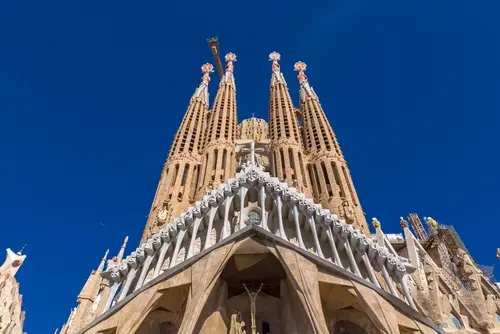
Start with the Sagrada Família, because it is the one ticket on this trip that sells out furthest ahead. The basilica opens every day of the week, including Christmas and New Year on reduced hours, so pick a morning slot and build the rest of the day around it. From there walk down Passeig de Gràcia and on to Plaça de Catalunya, which puts you at the top of the old town for the evening.
If you only have a week, drop Valencia and one Madrid day: take the direct high-speed train from Barcelona to Madrid, which runs via Zaragoza and takes around 3 hours, and keep the Seville leg as it is. That gives three days in Barcelona, two in Madrid and two in Seville, which is the version most people search as a 7-day Spain itinerary. For the full 10 days, follow our Barcelona guide for neighbourhood detail.
- Sagrada Família: Gaudí's basilica, open every day, book this first
- Palau de la Música Catalana: modernista concert hall, visited by guided tour
- Palau Güell: another Gaudí building, a good late-afternoon stop
Day 2: Park Güell, Gràcia and the Gothic Quarter
Go up to Park Güell early. Tickets for the park must be bought in advance online and they do sell out on busy days, and drainage works inside the park can disrupt some routes, so allow extra time. The Gaudí House Museum inside the park is closed for now, so do not plan around it.
Walk down through Gràcia for lunch, then take the metro to Jaume I for the Picasso Museum on Carrer de Montcada. The museum is closed every Monday, including public holidays, so swap this day with Day 3 if your Day 2 falls on a Monday. Finish in the Gothic Quarter around the cathedral and the Born.
- Park Güell: Gaudí's hillside park, advance online ticket required for the monumental zone
- Picasso Museum: on Carrer de Montcada by Jaume I metro, closed on Mondays
- Cathedral of Barcelona: the old town's cathedral, an easy end to the day
Day 3: Montjuïc museums and the beach
Take the metro to Espanya and climb to the Palau Nacional, home of the Museu Nacional d'Art de Catalunya. The collection is known for its Romanesque murals, rescued from churches in the Pyrenees, and the rooftop terrace looks straight down over the city. It is closed on Mondays except on public holidays.
The Fundació Joan Miró is also on Montjuïc. In the afternoon head down to the aquarium or go straight to Barceloneta beach, which is open to walk around at any time of year. Pack the evening before, because Day 4 starts at Barcelona Sants.
- Museu Nacional d'Art de Catalunya: Romanesque murals and a city-wide terrace, closed Mondays
- Fundació Joan Miró: the artist's own foundation, also on Montjuïc
- Aquarium de Barcelona: an easy stop before the beach
Day 4: Euromed to Valencia and the old town
Take a morning Euromed from Barcelona Sants to Valencia Joaquín Sorolla. The fastest trains take around 2 h 45 and most take about 3 hours, with roughly seven direct services a day, so book a seat rather than turning up. Drop your bags, then head for the old town.
The Mercado Central is the place to eat, but it closes on Sundays and shuts in the afternoon on other days, so arrive before lunch. La Lonja, the UNESCO-listed silk exchange, stands nearby. The Museo de la Seda and the church of San Nicolás are both in the old town, and our Valencia guide has the full old town walk.
- Museo de la Seda: silk museum in the old town, pairs with La Lonja
- San Nicolás: old town church with ticketed visits
- Hop-on hop-off bus: useful if you want the beach and the old town in one afternoon
Day 5: City of Arts and Sciences
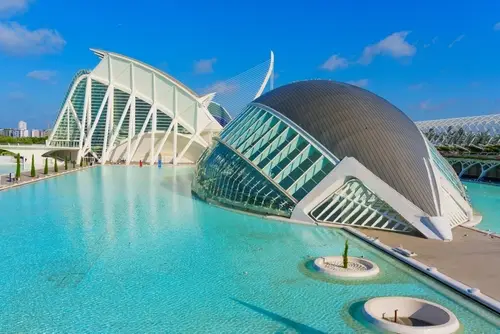
Give the whole day to the City of Arts and Sciences at the far end of the Turia gardens. The Oceanogràfic is the largest aquarium in Europe and takes most of a morning on its own, so book it ahead and go in when it opens. The ticket office closes an hour before the aquarium does.
The Hemisfèric and the Museu de les Ciències sit next door, so pair one of them with the aquarium rather than trying all three. Walk back through the Turia gardens, which are open to walk around. Football fans can swap the science museum for a Mestalla stadium tour.
- Oceanogràfic: the largest aquarium in Europe, book ahead and start here
- Hemisfèric: cinema dome in the same complex
- Museu de les Ciències: hands-on science museum in the same complex
- Bioparc Valencia: the city's zoo, an alternative for families
Days 6 and 7: Madrid's art museums and the Royal Palace
Leave Valencia Joaquín Sorolla on an AVE, Iryo or Ouigo service. The high-speed line via Cuenca and Requena takes around 1 h 35 at its fastest and about 2 hours on average, with around two dozen trains a day. Check which Madrid station your train uses, because services arrive at both Chamartín and Puerta de Atocha.
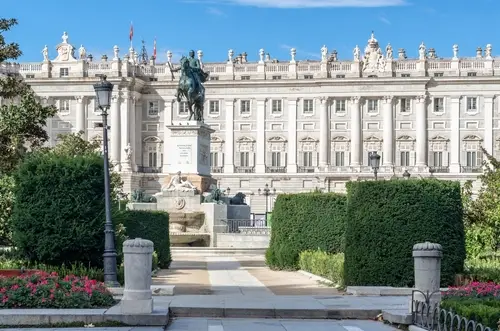
Spend Day 6 on the Paseo del Prado. The Prado opens every day, and the Thyssen-Bornemisza is also open daily, with shorter Monday hours, so either works whatever day you arrive. The Retiro park is open to walk around, though its Palacio de Cristal is closed for building works. On Day 7 start at the Reina Sofía for Guernica, which is closed on Tuesdays, then cross the city to the Royal Palace. Our Madrid guide covers the districts in between.
- Museo del Prado: open every day, book a timed slot for the morning
- Thyssen-Bornemisza Museum: across the Paseo del Prado, open daily with short Monday hours
- Museo Reina Sofía: Guernica and 20th-century Spanish art, closed on Tuesdays
- Las Ventas: Madrid's bullring, visited by tour
Day 8: Toledo day trip or a slower day in Madrid
Toledo is the classic day out from Madrid. The Avant train takes around 35 minutes, with roughly fifteen departures a day, so you can go after breakfast and be back for dinner. The old town is hilly, so wear decent shoes.
If you would rather stay in Madrid, this is the day for families: the Zoo Aquarium de Madrid, the Parque de Atracciones, or Parque Warner for a full day. Either way, buy your Madrid to Seville ticket before today so Day 9 starts without queues.
- Zoo Aquarium de Madrid: a half-day for families
- Parque de Atracciones: Madrid's own theme park
- Parque Warner Madrid: film-themed park, a full day
Days 9 and 10: Seville's Alcázar, cathedral and Triana
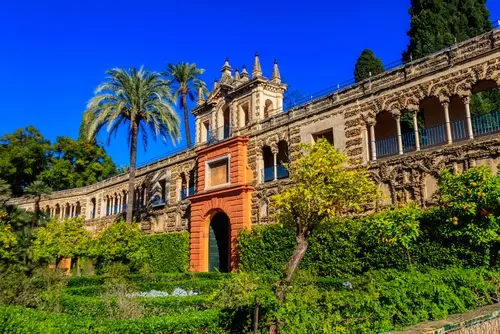
The AVE from Madrid Puerta de Atocha to Sevilla Santa Justa runs via Ciudad Real and Córdoba and takes around 2 h 40, with Iryo and Ouigo also on the route. Head straight for the Royal Alcázar. Entry is by 30-minute time slot with limited capacity, tickets are sold online and busy dates sell out in advance, so this is the booking to make before you leave home.
Seville Cathedral and the Giralda make up the other half of the day, a UNESCO World Heritage site since 1987, with cultural visits running every day and a shorter Sunday window. Give Day 10 to the river side of the city: the Maestranza bullring on Paseo de Colón, then Triana and the Setas de Sevilla for the view and a flamenco show in the evening. To keep going south, our Andalusia in 5 days route continues from here to Córdoba and Málaga, and our Seville guide has the district by district detail.
- Royal Alcázar: palace and gardens, 30-minute timed slots, book first
- Plaza de Toros de la Maestranza: 18th-century bullring on the Guadalquivir with a museum tour
- Palacio de las Dueñas: aristocratic house and gardens
- Setas de Sevilla: rooftop walkway over the old town
- Flamenco Dance Museum: exhibition and evening show
Practical tips
- Book all three long train legs as soon as your dates are fixed. Every high-speed service has reserved seats, and the Valencia to Madrid and Madrid to Seville lines are run by Renfe AVE, Iryo and Ouigo, so compare departure times across all three.
- Check the Madrid station on your ticket. Trains from Valencia arrive at either Chamartín or Puerta de Atocha, and the Seville AVE leaves from Puerta de Atocha, so allow time to cross the city if they differ.
- Plan Barcelona around Mondays: the Picasso Museum and the MNAC are both closed that day, while the Sagrada Família opens every day. In Madrid the Reina Sofía is closed on Tuesdays, while the Prado and the Thyssen open daily.
- The Mercado Central in Valencia closes on Sundays and shuts in the afternoon on other days, so schedule it for a weekday morning.
- July and August in Seville regularly reach about 38 degrees, so if you travel then, book the Alcázar for the earliest slot and keep afternoons for shade. Late spring and early autumn are the easiest months for the whole route.
- Timed tickets sell out furthest ahead at the Sagrada Família, Park Güell and the Royal Alcázar. Book those three first, then fit the rest of each day around their slots.
 English
 Español
 Deutsch
 Português do Brasil
 Français
 Italiano
 Nederlands (Formeel)